I was a second grader at Bird Elementary School in East Walpole, about twenty-five miles south of Boston. It was Friday afternoon, November 22, 1963; classes had just been let out for the weekend. Normally I would have cut through Bird Park to our family house on Burns Avenue but instead headed over to East Walpole Square to get a haircut. Thanksgiving was on the following Thursday; perhaps my parents wanted me looking neat and trim for the holiday. The barbershop was a ten-minute walk away. As I exited the school grounds, I likely crossed Washington Street to the sidewalk that runs alongside the wrought iron fence that encloses Bird Park. Directly opposite the park’s main entrance was and still is the Peggy Lawton bakery housed in a former movie theater. Same with Saint Mary’s Catholic Church, the red brick bulwark up ahead on the corner of Rhoades Avenue where I would receive First Communion the following spring. From there, the street slopes down into the Square.

At the time, a two-story wood shingled building dominated by a clock tower occupied an entire corner of the Square. Known as “Bird Hall” when it was originally constructed by the local industrialist Francis William Bird, it resembled the set of a town in a TV western and housed the shops in the Square. Rocky’s, the convenience store facing Chestnut Street, was a favorite destination of mine. It was where you could buy all the kid essentials: gum, candy and comic books. Diagonally across the Square was the entrance to the Bird & Son factory where asphalt shingles and other roofing materials were manufactured. I occasionally lingered in the Square to watch a stream of workers, lunch pails in hand, exit the plant at the end of the day.
If memory serves me correctly, the barbershop was located on the Washington Street side of Bird Hall, next to a store that sold Boy Scout uniforms and supplies. The barber, who wore a black eye patch over one eye, was named Skeets. He and his family lived on our street, at the end of Burns Avenue; his kids were friends with me and my siblings. Their family home was an old farmstead, a remnant of an earlier time before the neighborhood turned into a densely populated suburb. It had a barn, a chicken coop, and a rickety corral that ran behind our yard where a lone horse intermittently grazed. Once I was at Skeets’ place when the family culled some of their chickens, watching wide eyed as one headless chicken after another zig zagged a few frantic steps before collapsing in the dirt.
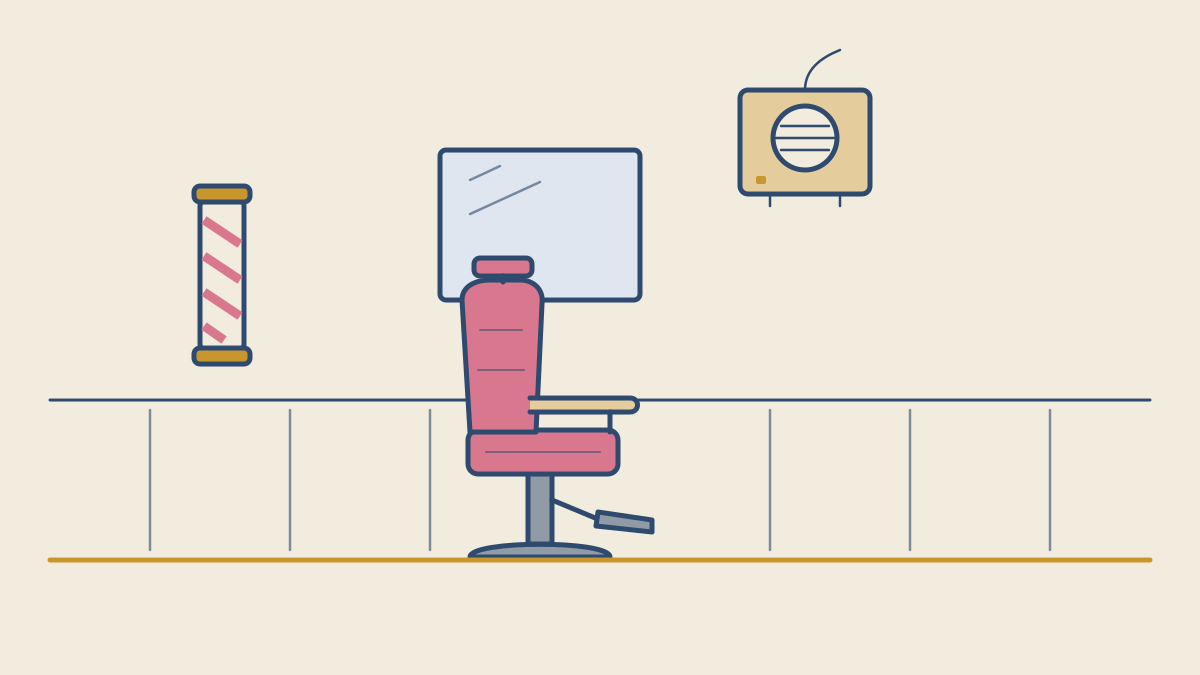
That Friday, I took a seat along the wall and watched as Skeets cut a customer’s hair in the one of those adjustable barber chairs. High up on the wall was a radio speaker encased in a brown box. I can picture that box very clearly. Over the radio came an urgent bulletin: President Kennedy had been shot and killed in Dallas, Texas. I can’t recall whether the newscaster used that ugly word assassinated but I quickly learned its meaning: a murder with history-altering consequences. I have no memory of how Skeets or any of the other customers in the shop reacted to the shocking news, only how it affected my seven-year old self. Here in Massachusetts President Kennedy was one of our own, a source of pride to my Irish-Catholic family. The realization that this dynamic young leader had been cut down in an instant cast a sudden shadow across the benevolent, sunlit world I lived in. Shaken, I rose from my seat and left the barbershop without a word.
I walked, possibly ran, straight home. In those days, my mother stayed at home with her seven children. Whether she had already heard the news or I blurted it out when I came through the front door is lost to time. In the days that followed, my family huddled around our small black and white TV to watch President Kennedy’s funeral. The pall didn’t lift until the Beatles arrived in America in February 1964, inaugurating a new era in my childhood that relegated Camelot to the margins. Except for this coda: three years later, my fifth-grade class was reading a story together about a friendly boy named Oswald; the reflexive hostility I felt toward this character brought it all back.
Leave a comment