Janeese Lewis George won D.C.’s mayoral race Tuesday. The Associated Press called it at 9:56 p.m., with unofficial results showing her with 84 percent of the vote to 10.3 percent for independent Rhonda Hamilton (Washington Examiner). Robert Gross of the Statehood Green Party was also on the ballot.

That isn’t the official result yet. The D.C. Board of Elections plans to certify the results on Dec. 2, and even that date is marked tentative.
That’s not a delay. That’s the calendar.
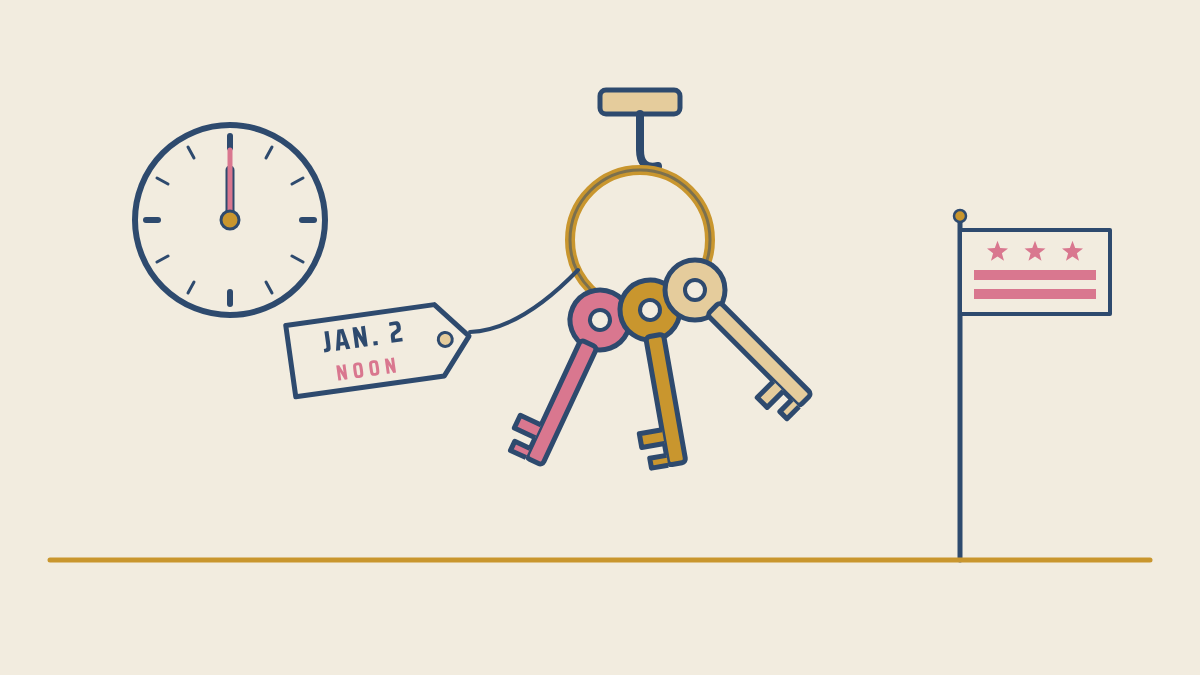
Lewis George is now the mayor-elect. She gets a month of counting, a month of waiting, and then, at noon on Jan. 2, the keys to a city budget that its own leaders already describe with words like “gap” and “cliff.” Here’s the road from here to there.
Election night’s numbers aren’t the final numbers
Mail ballots count if they’re postmarked by Election Day and arrive no later than the 10th day after. On this year’s Board calendar, that’s Nov. 13.
That matters more than you might think. In the 2024 general election, 52.77 percent of the ballots cast came by mail. So the percentages you saw on your phone last night came from a partial count, and remember your Stats 101: the first ballots counted may not be a random sample of the rest. It’s like judging a potluck by the first three dishes. The AP has called the mayor’s race anyway; the late ballots still go into the final count.
After Nov. 13, things move fast. Voters have until Nov. 19 to cure a mail ballot, which means fixing a problem with it so it counts. The final count of mail, special and challenged ballots is Nov. 20. Then the Board runs a public manual audit of the voter-verifiable records from Nov. 21 to 25, with a report due Nov. 30, and certifies on Dec. 2. Everything from Nov. 20 on is marked tentative.
If Dec. 2 sounds oddly specific, it’s a repeat: the Board certified the 2024 general election at its Dec. 2, 2024 meeting.
The keys change hands at noon
Under the Home Rule Act, the mayor’s four-year term begins at noon on Jan. 2 of the year after the election. Until then, the winner is the mayor-elect: the title, but not the keys.
The 2014 handoff gives you a feel for how those eight weeks get used. Muriel Bowser was elected on Nov. 4, 2014, and her transition committee was scheduled to kick off on Nov. 12, with policy committees on topics from housing to public safety. Her transition office was authorized to spend $300,000 in public money, and the plan said she would raise no private funds. “We won’t wait until Jan. 2,” she said at the time. She was sworn in by noon on Jan. 2, 2015.
The budget waiting on the desk
Here’s where it gets less ceremonial. Council Chairman Phil Mendelson has estimated a $650 million funding gap in fiscal 2028 to keep programs now paid for with one-time money. Bowser, who returned this year’s budget unsigned in July, wrote that it set up the next mayor and Council with an “$837 million fiscal cliff” (WTOP). In June, Chief Financial Officer Glen Lee said that drawing on reserves would mean approving an unbalanced budget, and Mendelson said the city uses only a small share of its reserves (WTOP).
Two officials, two numbers. That doesn’t automatically mean one of them is wrong. The reporting doesn’t say whether they measure the same thing, so before you pick one, ask what’s in the bucket and over what years. Both can be true.
Context matters too: a number’s size depends on what you divide it by, the denominator. Hamilton has cited a $22 billion budget; against that, $650 million is about 3 percent. But the fiscal 2027 local budget act the CFO analyzed in April had about $11.8 billion in local funds. Against that, it’s about 5.5 percent. (Yes, that’s a 2028 gap over a 2027 budget. It’s the closest yardstick on hand.) Same gap, different-looking problem.
One thing already on the books: D.C.’s sales tax increase from 6 to 7 percent has been postponed, with the 6 percent rate staying through Sept. 30, 2027. WJLA reports the rise to 7 percent is now set for Oct. 1, 2027, during the next mayor’s term.
What Lewis George says she’ll do first
In WJLA’s Oct. 27 interviews, Lewis George, a Democrat, said she wants a desk-by-desk audit of agencies, won’t raise taxes on working families, and would end cooperation between D.C. police and federal immigration enforcement in her first 100 days. She told FOX 5 DC: “One of the things we’re going to do early in my administration is a forensic analysis of every District agency, making sure we’re taking account of savings and spending, and also fraud and abuse and mishandling.”
President Trump called her a “communist” in a June social media post. She told WJLA she looks forward to working with the administration as mayor.
She has also said closing one tax loophole has “the potential of producing $500 million” (WJLA). That’s her own estimate, so give it a squint.
Next up
The next big deadline is Nov. 13, the last day for mailed ballots to arrive. Then the cure deadline, the final count, the audit and, on Dec. 2, the official result.
Leave a comment